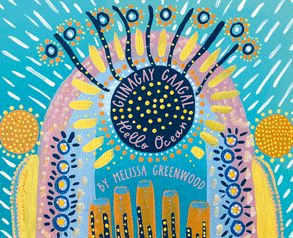
Giinagay Gaagal, Hello Ocean
Giinagay Gaagal, Hello Ocean
Melissa Greenwood
ABC Books, 2023
24pp., hbk., RRP $A24.99
9780733343001
Gaagal (ocean) is our special place,
we love to swim in the waves.
We’ll catch some yamaarr (fish),
eat, dance and play games.
Is there anything more iconic than the sights and sounds of little ones running down the beach to dip their toes in the cool waters of the ocean on a hot summer’s day, carefree and careless?
It’s a scene that has been and will be repeated for decades and decades as the sun beats down and the waves invite. But, after reading this lyrical ode to the ocean, perhaps this summer our children might stop and consider the privilege they are enjoying, maybe even offer a word of appreciation…
But first, before walking on Country, we talk to the land
and het her know that we re here to play.
We are grateful for what she has to offer,
we promise to take care of her during our stay.
Woven among the stunning artwork that is so evocative of the experience if you take the time to look at it, is a description of something that has been done over and over and over – dancing over the hot yellow sand, gathering bush fruits and collecting pipis in the tide zone, keeping an eye out for sharks and knowing when it is safe to swim, watching the whales and dolphins twist and turn in their own special water dance, collecting shells, dodging crabs, building a fire to make lunch and sheltering from sunburn – all taking on a bit of extra magic as the children play but all the while having that connection that keeps them aware of how lucky they are. “We say, ‘Yaarri yarraang gaagal, darrundang, Goodbye ocean and than you,,, until next time.'”. Each thing has its own particular and unique place in the landscape and landshape that is so much more than just for the delight and amusement of the human intruders.
As with Miimi Marraal, Mother Earth, there are indigenous words scattered throughout, and the full text is included in both English and Gumbaynggir in the final pages, adding to the resources for preserving and revitalising First Nations languages.
This is another of a number of brilliant new books that help our children understand the significance of that now-familiar Acknowledgement of Country, perhaps even inspiring them to develop their own connections as another summer looms and they too, “must go down to the seas again”.